Runtime Detection
See every syscall. Stop threats before they spread.
eBPF probes attach to kernel tracepoints at the node level — capturing process ancestry, network connections, and file operations across every container workload with less than 2ms P99 overhead.
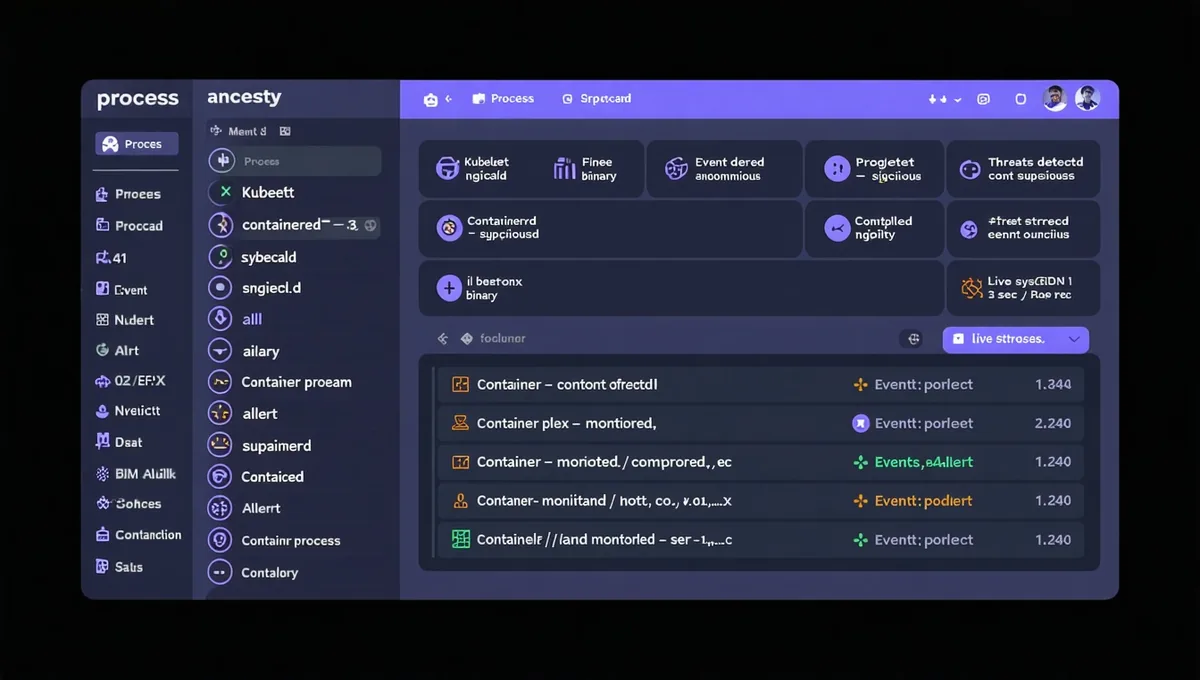
How eBPF Detection Works
Kernel-level visibility, zero instrumentation
Syscall tracepoint probes
The eBPF program attaches to sys_enter_* and sys_exit_* tracepoints. Every open, connect, execve, and ptrace call generates a structured event in the ringbuffer — processed in userspace with <2ms P99 latency.
Process ancestry tree
Each event carries the full process chain from container entrypoint to child process. Detects classic container escape patterns: shell spawning from a web process, unexpected binary execution, namespace escape via clone flags.
Network connection map
Intercepts connect() and accept() calls to build a live network graph of which pods are talking to which endpoints. Unexpected outbound connections to external IPs trigger configurable alerts.
Configurable detection rules
Comes with a baseline ruleset tuned for Kubernetes workloads. Custom rules use a YAML-based format compatible with Falco rule syntax — reuse your existing rules library.
Detection Scenarios
Threats we catch out of the box
Container escape
Privileged container abuse, host namespace access, and mount namespace escape attempts — detected via syscall pattern matching on unshare, clone, and host path mounts.
Reverse shell detection
Shell process spawned from a non-shell parent (e.g. nginx → bash) combined with an outbound TCP connection — high-confidence reverse shell pattern, firing in under 50ms of event arrival.
Cryptominer execution
Detects XMRig and similar miners via binary name + CPU affinity syscalls + outbound connection to mining pool ports. Includes detection of renamed binaries via hash comparison.
Lateral movement
Internal service-to-service connections outside normal network policy, combined with credential-related file reads — catches the early stages of pod-to-pod lateral movement before exfiltration.
Runtime visibility in your cluster today.
Helm install in 15 minutes. First detection finding in the same sprint.